
⚡ Quick IRR to Toman Converter
Instantly convert between Iranian Rials and Tomans:
Formula: 1 Toman = 10 Rials | Remember: Iranians often drop zeros in conversation!
Understanding Iran's Currency: The Complete IRR vs Toman Guide 2025
Navigating Iran's dual currency system is one of the biggest challenges foreign travelers face. The confusion between Iranian Rial (IRR) and Toman can lead to costly misunderstandings, frustration, and unnecessary stress during your trip. This comprehensive guide will demystify Iran's unique currency landscape, providing you with all the knowledge needed to handle money confidently throughout your Iranian adventure.
Iran operates on a dual currency system where the official currency is the Iranian Rial (IRR), but in everyday conversations, transactions, and market dealings, people use Toman. This guide covers everything from historical context to practical tips, exchange strategies, and common pitfalls to avoid. Whether you're planning a trip to Tehran, Shiraz, or Isfahan, understanding this system is crucial for a smooth travel experience.
⚠️ Critical Warning for Travelers
The most common financial mistake tourists make in Iran is confusing Rials and Tomans. When a local says "50,000," they almost always mean 50,000 Tomans (500,000 Rials), not 50,000 Rials. This misunderstanding can make you overpay by 10 times! Always clarify: "Is this price in Toman or Rial?"
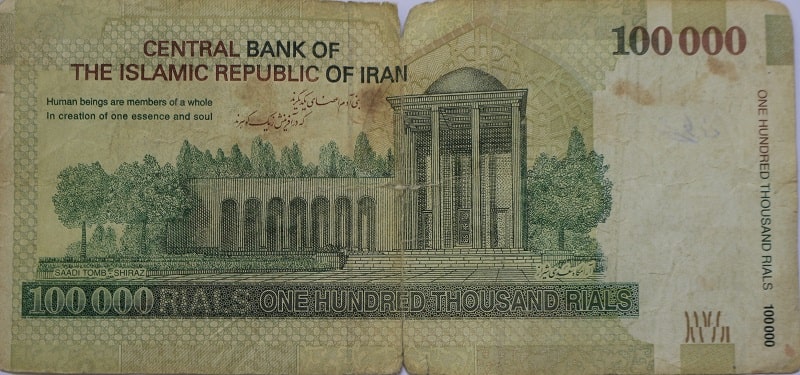
Iranian banknotes showing denominations in both Rials and Tomans (1 Toman = 10 Rials)
⚡ Quick Reference: IRR vs Toman at a Glance
Before diving into details, here's a quick reference table to understand the relationship:
| Toman (Spoken) | Rial (Official) | What It Means | Common Usage Example |
|---|---|---|---|
| 1 Toman | 10 Rials | Basic conversion unit | Too small for practical use |
| 100 Toman | 1,000 Rials | Small purchase | Bottle of water, street snack |
| 1,000 Toman | 10,000 Rials | Everyday item | Taxi ride, simple meal |
| 10,000 Toman | 100,000 Rials | Significant purchase | Nice restaurant meal |
| 50,000 Toman | 500,000 Rials | Major expense | Hotel night, tour package |
| 100,000 Toman | 1,000,000 Rials | Large transaction | Weekly budget, shopping |
Memory Trick: To convert Toman to Rial, simply add one zero. To convert Rial to Toman, remove one zero. When someone says "50" meaning 50,000 Tomans, they're actually talking about 500,000 Rials!
📜 Historical Background & Origins
Understanding why Iran has this dual currency system requires looking at its historical evolution. The Toman actually predates the Rial by centuries and has deep cultural roots in Persian history.
Ancient Origins of Toman
The word "Toman" originates from the Mongolian word "tümen," meaning "ten thousand," introduced during the Mongol Ilkhanate period (13th century). It was originally a military term for a unit of 10,000 soldiers. The Toman first appeared as a gold coin during the reign of Ilkhanate ruler Ghazan Mahmud (1295-1304) and remained Iran's primary currency through successive dynasties including Safavid, Afsharid, Zand, and Qajar periods.
Introduction of the Rial
The Rial was introduced in 1798 as a silver coin worth 1,250 dinars (1/8 of a Toman). However, it wasn't until 1932 that Reza Shah Pahlavi officially adopted the Rial as Iran's primary currency as part of modernization efforts. The conversion rate was fixed at 1 Toman = 10 Rials, establishing the relationship that persists today despite the Rial's official status.
Modern Persistence of Toman
Despite the official change, Iranians continued using Toman in daily life for practical reasons. As inflation accelerated in the late 20th and early 21st centuries, dealing with large numbers of zeros became cumbersome. Saying "50,000 Toman" was much simpler than "500,000 Rials," leading to the Toman's continued dominance in verbal transactions.
In 2020, the Iranian parliament passed legislation to officially rename the currency to Toman and remove one zero (making 1 new Toman = 10,000 current Rials), but implementation has been slow due to economic challenges and the complexity of such a transition.
🔑 Key Differences: IRR vs Toman Explained
Understanding the distinction between these two units is crucial for financial navigation in Iran. Here's a detailed breakdown:
Official Status Comparison
Iranian Rial (IRR)
- Official Status: Iran's official currency
- International Code: IRR
- Bank Usage: Used in all banking operations
- Government: Used in official documents
- International: Recognized by IMF, World Bank
- Symbol: ﷼ (Rial sign)
Toman (Tomans)
- Official Status: Unofficial but widely used
- International Code: None (not recognized)
- Bank Usage: Not used in banking
- Government: Not used in official documents
- International: Not recognized internationally
- Symbol: None officially
Mathematical Conversion Formula
Conversion Formulas
Toman to Rial: Multiply by 10
Example: 50,000 Toman × 10 = 500,000 Rials
Rial to Toman: Divide by 10
Example: 500,000 Rials ÷ 10 = 50,000 Toman
Psychological Pricing
Iranians use Toman for psychological pricing advantages. A product priced at "99,000 Toman" sounds significantly cheaper than "990,000 Rials," even though they're the same amount. This practice is similar to how some countries use psychological pricing like $9.99 instead of $10.
🛒 Practical Daily Usage Guide 2025
Here's how Iran's dual currency system works in everyday situations you'll encounter as a traveler:
Verbal Communication Patterns
In spoken Farsi, Tomans dominate completely. Key patterns to recognize:
- Dropped Zeros: Iranians often drop "thousand" when speaking. "Panjâh" (fifty) usually means 50,000 Tomans, not 50 Tomans
- Omitted Unit: The word "Toman" is frequently omitted. "Shast" (sixty) means 60,000 Tomans
- Context Clues: A taxi won't cost 5 Tomans (50 Rials) but 5,000 Tomans (50,000 Rials)
- Essential Phrase: Always ask "Rial ast ya Toman?" (Is this Rial or Toman?)
Written Price Formats
Written prices vary by establishment type:
- Supermarkets & Chain Stores: Always in Rials (e.g., 150,000 ﷼)
- Traditional Bazaars: Often in Tomans, sometimes abbreviated as "T"
- Restaurants: Mixed usage - fancier places use Rials, local eateries use Tomans
- Transport Tickets: Always in Rials
- Hotel Rates: Usually quoted in USD/EUR, but local payment in Rials
Shopping & Market Transactions
When shopping in Iran's famous bazaars:
- Initial prices are always quoted in Tomans
- Bargaining is expected - negotiate in Tomans
- Final price may be written in Rials on receipts
- Vendors may switch between units during negotiation
- Always confirm the final price in both units

Exchange shops (Sarrafi) in Iran - Best places to get fair rates for your foreign currency
💱 2025 Currency Exchange Guide
Getting the best exchange rates in Iran requires knowing where to go and how to negotiate. Here's your complete 2025 guide:
Current Exchange Rates (November 2025)
💎 Approximate Market Rates
1 USD
≈ 1,125,000 IRR
≈ 112,500 Toman
1 EUR
≈ 1,305,000 IRR
≈ 130,500 Toman
1 GBP
≈ 1,420,000 IRR
≈ 142,000 Toman
1 AED
≈ 306,000 IRR
≈ 30,600 Toman
Note: Rates fluctuate daily. Check Bonbast.com for live rates. These are unofficial market rates - official bank rates are significantly lower.
Best Exchange Locations by City
Where to get the best rates in major Iranian cities:
- Tehran: Ferdowsi Square area (best rates nationwide), Jordan Street
- Shiraz: Vakil Bazaar, Karim Khan Zand Street
- Isfahan: Around Naqsh-e Jahan Square, Chahar Bagh Street
- Mashhad: Ferdosi Street near the Holy Shrine
- Tabriz: Tabriz Historic Bazaar Complex
- Yazd: Around Amir Chakhmaq Complex
Exchange Tips & Strategies
- Avoid airports: Rates are 10-20% worse than city rates
- Compare 3 shops: Always check rates at multiple sarrafis
- Bills matter: New, crisp $100/€100 bills get best rates
- Small amounts first: Exchange small amount to test the process
- Count carefully: Count money before leaving exchange shop
- Get receipt: Always ask for an exchange receipt
Related Reading: For comprehensive budget planning, check our Iran Budget Guide 2025 and Complete Iran Travel Guide.
🏦 Banking & Payment Systems in Iran
Understanding Iran's unique financial landscape is crucial due to international sanctions:
International Card Restrictions
⚠️ Critical Information for Travelers
International credit/debit cards DO NOT work in Iran: Visa, MasterCard, American Express, Discover, and all other international payment cards are completely useless in Iran due to sanctions. You must bring all necessary cash for your entire trip.
Domestic Iranian Banking
Iran has developed its own banking infrastructure:
- Shetab System: Iran's interbank network connecting all ATMs
- Local Debit Cards: Iranians use domestic cards for most transactions
- Banking Hours: Saturday-Thursday, 8:00 AM - 4:00 PM (closed Fridays)
- Digital Payments: Apps like Behpardakht and ZarinPal for online payments
- ATM Access: Foreign cards don't work; only for Iranians with local accounts
Practical Solutions for Travelers
Despite restrictions, several workarounds exist:
- Prepaid Local Cards: Some tour operators offer prepaid Shetab cards
- Hotel Payments: Many hotels accept USD/EUR directly
- Tour Packages: Reputable companies can handle payments in advance
- Cash Management: Bring mix of denominations and currencies
Visa Information: Before worrying about money, ensure you have proper entry documents. Read our Iran Visa Process Guide and common Iran Visa Mistakes to avoid.
💰 Budget Planning & Daily Costs 2025
Iran offers excellent value for money, but understanding costs helps with planning. Here are typical daily expenses in Tomans (remember: 10 Rials = 1 Toman):
Accommodation Costs
- Budget Hostel: 800,000-1,500,000 Toman/night (8-15 million Rials)
- Mid-range Hotel: 1,500,000-3,000,000 Toman/night (15-30 million Rials)
- Luxury Hotel: 3,000,000-6,000,000+ Toman/night (30-60+ million Rials)
- Traditional Guesthouse: 1,000,000-2,000,000 Toman/night (10-20 million Rials)
Food & Dining Expenses
- Street Food Meal: 150,000-300,000 Toman (1.5-3 million Rials)
- Local Restaurant: 300,000-600,000 Toman/person (3-6 million Rials)
- Mid-range Restaurant: 600,000-1,200,000 Toman/person (6-12 million Rials)
- Fine Dining: 1,200,000-2,500,000+ Toman/person (12-25+ million Rials)
- Bottle of Water: 50,000-100,000 Toman (500,000-1 million Rials)
Transportation Costs
- City Taxi (short ride): 150,000-300,000 Toman (1.5-3 million Rials)
- Snapp (Iranian Uber): 100,000-250,000 Toman (1-2.5 million Rials)
- Metro/Bus Ticket: 50,000-100,000 Toman (500,000-1 million Rials)
- Intercity Bus: 500,000-2,000,000 Toman (5-20 million Rials)
- Domestic Flight: 2,000,000-6,000,000 Toman (20-60 million Rials)
Daily Budget Estimates
Budget Traveler
$25-40/day
- Hostel accommodation
- Street food & local meals
- Public transportation
- Limited entrance fees
Mid-range Traveler
$50-80/day
- 3-star hotel
- Restaurant meals
- Mixed transportation
- Most entrance fees
Luxury Traveler
$100-200+/day
- 4-5 star hotel
- Fine dining
- Private transfers
- All activities & shopping
Budget Planning: For detailed budget breakdowns, see our Iran Budget 2025 guide. For food-specific costs, check Iran Food Guide 2025.
💡 Essential Money Tips for Iran Travel 2025
These practical tips will save you money and prevent headaches:
Cash Management Strategies
- Bring Crisp Bills: New $100/€100 bills from 2013+ series get best rates
- Multiple Locations: Split cash between money belt, hotel safe, day bag
- Small Denominations: Get small Rial notes for daily expenses
- Exchange Gradually: Don't exchange all cash at once
- Emergency Reserve: Keep $200-300 USD/EUR separate for emergencies
Bargaining Guidelines
- Where to Bargain: Bazaars, taxis, souvenir shops, some restaurants
- Where Not to Bargain: Supermarkets, chain stores, museums, hotels
- Starting Point: Offer 50-60% of initial asking price
- Be Polite: Bargaining is expected but should be friendly
- Know Limits: Small differences matter more to sellers than to you
Essential Farsi Money Phrases
Must-Know Money Phrases
- "Chand toman-e?" - How much is it? (in Tomans)
- "Rial ast ya Toman?" - Is this Rial or Toman?
- "Nerkh-e arz chand-e?" - What's the exchange rate?
- "Mishe gheymat ra kam konid?" - Can you lower the price?
- "Pool-e kuchik darid?" - Do you have small change?
- "Gozaresh mikhaham" - I want a receipt
- "In chand Riale?" - How many Rials is this?
- "In chand Tomane?" - How many Tomans is this?
Language Help: For more essential phrases, check our Iran Phrases Guide. For cultural tips, see Iran Etiquette Guide.
🚫 Avoiding Currency Scams & Pitfalls
While most Iranians are honest, it's wise to be aware of common financial pitfalls:
Common Scams to Watch For
- Toman/Rial Confusion: Most common scam - quoting in Tomans but charging as Rials
- Fake Banknotes: Check for watermarks, security threads, raised print
- Short-changing: Count money carefully, especially with large denominations
- Distraction Techniques: Be alert during money counting
- Fake Exchange Shops: Use reputable sarrafis with visible licenses
- Taxi Meter "Malfunction": Agree on price before entering any taxi
Verification Techniques
- Check Bills: 500,000 and 1,000,000 Rial notes should have security threads
- Feel Texture: Real notes have raised print you can feel
- Watermark Test: Hold to light to see watermark
- UV Light: Some shops have UV lights to verify notes
- Serial Numbers: Check for consistent serial number printing
Safety Precautions
- Exchange During Day: Only exchange money during business hours
- Public Places: Exchange in shops, not on street corners
- Hotel Safes: Use them for excess cash and valuables
- Discreet Counting: Don't count large sums in public view
- Digital Records: Take photos of exchange receipts
Safety Information: For comprehensive safety advice, read our Iran Safety Guide 2025 and Iran Travel Safety Guide.
🔮 Future of Iranian Currency
Iran's currency system may undergo significant changes in coming years:
Currency Redenomination Plan
In 2020, Iran approved a plan to:
- Officially change currency from Rial to Toman
- Remove one zero (1 new Toman = 10,000 current Rials)
- Simplify transactions and reduce psychological burden
- Align official currency with common usage
Current Status: Implementation delayed due to economic challenges, inflation concerns, and transition complexity. No firm timeline exists for full implementation.
Digital Currency Developments
- Digital Rial: Central Bank developing digital currency
- Cryptocurrency: Legal mining and some acceptance emerging
- Digital Payments: Growing local app ecosystem
- Potential Integration: Future possibilities if sanctions ease
Sanctions Impact
If international sanctions were lifted:
- International banking reintegration
- Credit/debit card functionality restoration
- Exchange rate stabilization
- Simplified financial transactions for tourists
✅ Final Recommendations & Summary
Mastering Iran's currency system is challenging but manageable with the right knowledge. Here are your key takeaways:
🎯 Essential Checklist for Iran Currency Management
- Always clarify: Ask "Rial ast ya Toman?" for every price
- Remember conversion: 1 Toman = 10 Rials (add/remove zero)
- Bring cash: USD/EUR in crisp $100/€100 bills
- Exchange wisely: Use sarrafis in cities, avoid airports
- Manage cash: Split between locations, use hotel safes
- Check bills: Verify banknotes for authenticity
- Budget appropriately: $30-80/day covers most travelers
- Learn key phrases: Essential Farsi money terms
- Stay informed: Check Bonbast.com for current rates
- Be patient: Currency confusion is normal - stay calm
Related Resources for Your Iran Trip
Continue your Iran travel preparation with these essential guides:
📋 Planning & Preparation
💰 Money & Budget
🎭 Culture & Safety
Need Personalized Currency Advice?
Contact our team for current exchange rate information, money management tips, and assistance with financial planning for your specific Iran itinerary.
💬 Chat on WhatsAppAlso check our Iran FAQ for common questions
Final Thought: While Iran's currency system seems confusing at first, it becomes manageable with practice. The key is staying alert, asking questions, and remembering the basic conversion. The rewards of experiencing Iran's incredible hospitality, breathtaking architecture, and rich culture far outweigh any initial currency confusion.