
⚡ Quick Handicraft Price Estimator
Estimate 2026 prices for authentic Iranian crafts:
Prices in Iranian Rial (IRR). 1 USD ≈ 540,000 IRR (Feb 2026 unofficial rate). For currency help, see IRR vs Toman Guide.
Persian Handicrafts: Iran's Living Artistic Heritage
Iranian handicrafts and traditional arts represent one of the world's oldest and most sophisticated artistic traditions. For millennia, Persian artisans have perfected techniques in carpet weaving, miniature painting, khatam (marquetry), enamel work (minakari), and countless other crafts that continue to thrive today. For travelers to Iran, exploring these traditional Persian arts offers an unparalleled window into the country's soul and provides the most meaningful souvenirs imaginable.
This comprehensive 2026 guide will immerse you in the rich world of Iranian handicrafts. You'll discover the history and techniques behind each art form, learn 2026 price guides for authentic pieces, master the skills to verify authentic Persian crafts versus tourist reproductions, and discover the best places to shop in Tehran, Isfahan, Shiraz, and beyond. Whether you're seeking a Persian rug investment, a delicate miniature, or simply beautiful souvenirs, this guide ensures you shop with confidence and cultural understanding.
⚠️ Essential Shopping Wisdom
The Iranian bazaar is a place of negotiation and relationships. While bargaining is expected, approach it with respect—it's a social dance, not a confrontation. This guide empowers you with knowledge of fair prices, quality indicators, and cultural etiquette. Remember: building rapport with a shopkeeper over tea often leads to better prices and authentic connections. For cultural guidance, see our Iran Etiquette Guide.
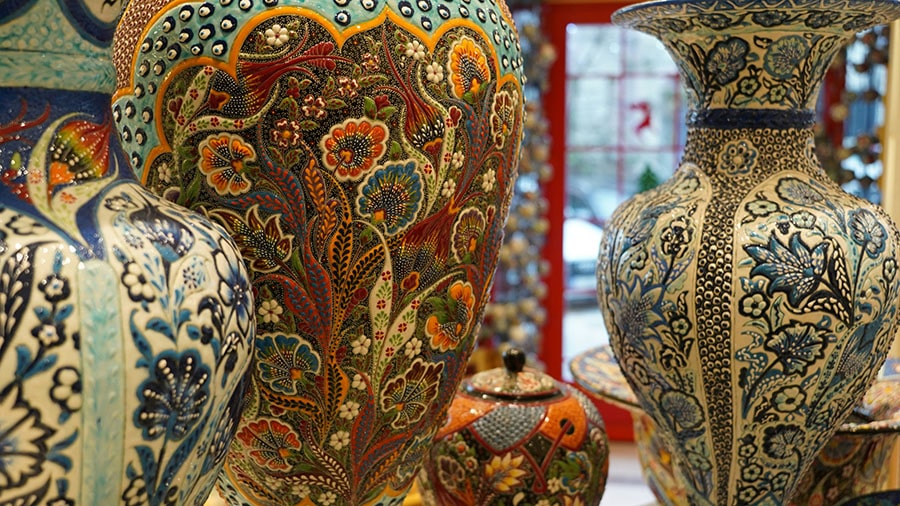
A vibrant display of authentic Persian handicrafts in Isfahan's historic bazaar near Naqsh-e Jahan Square.
🧶 Persian Carpets & Rugs: The Crown Jewel of Iranian Crafts
No discussion of Iranian handicrafts begins without the Persian carpet—a symbol of Persian culture recognized worldwide for its unparalleled artistry, complexity, and beauty. Each Persian rug is a woven poem, with patterns telling stories of regional identity, nature, and mythology.
Major Carpet-Weaving Regions & Their Styles
| Region | Distinctive Features | Pattern Style | Typical Colors |
|---|---|---|---|
| Tabriz | Fine knotting, diverse designs, medallion patterns | Central medallion, hunting scenes, garden designs | Ivory, blue, rust, green |
| Isfahan | Silk or fine wool, symmetrical, elegant | Curvilinear, arabesques, medallion with pendants | Navy, ivory, terracotta, gold |
| Kashan | Very dense knots, high quality, often silk | Central medallion, vine scrolls, tree of life | Deep red, navy, ivory |
| Shiraz / Qashqai | Nomadic, geometric patterns, tribal motifs | Hexagons, diamond lattice, stylized animals | Rich reds, blues, orange, green |
| Mashhad | Large sizes common, prayer rugs | Mihrab designs, floral patterns | Dark red, navy, green |
| Kerman | Finely woven, European influence | Vase designs, hunting scenes, pictorials | Ivory, pink, light blue, green |
Carpet Materials: Wool, Silk, and Cotton
Wool carpets: Most common, durable, warm. Mountain sheep wool provides natural lanolin for luster. Silk carpets: Finest quality, incredible detail, luminous sheen, higher price. Often used for prayer rugs or small accent pieces. Cotton: Used for foundation/warp, never for pile. Knot count (knots per square inch/meter) determines quality—higher knots = finer detail and higher value.
💡 Carpet Authenticity Test: The Burn Test
Gently pull a few fibers from the fringe (unobtrusive spot). Burn them carefully: Wool smells like burning hair and crumbles to ash. Synthetic smells like plastic and melts into hard bead. Natural dyes show subtle color variations; synthetics are perfectly uniform. The back of a hand-knotted rug shows the same pattern as the front; machine-made backs are uniform.
2026 Price Range: A quality 2x3 meter wool carpet starts at 200M-500M IRR ($370-$925). Silk carpets of same size: 800M-2B+ IRR ($1,480-$3,700+). Antique or masterwork pieces: astronomical.
🎨 Persian Miniature Painting: Poetry Visualized
Persian miniature painting is one of Iran's most refined art forms—intricate, detailed works that often illustrate classical Persian poetry (Ferdowsi's Shahnameh, Hafez, Rumi) or depict courtly life, hunting scenes, and mythological tales. This art requires years of apprenticeship, using natural pigments and brushes made from a single hair.
A master miniature artist in Isfahan applying intricate details with specialized brushes.
What to Look For
- Materials: Authentic miniatures use natural pigments (lapis lazuli for blue, cinnabar for red), gold or silver leaf for accents, and hand-made paper or camel bone/camel bone paper.
- Detail: Examine under magnification—authentic works have incredible precision, with individual facial expressions visible.
- Artist Signature: Master artists sign their work; research reputable names like Mahmoud Farshchian (modern master).
- Age vs. Reproduction: Most sold are contemporary works—still valuable as art. Antique miniatures (centuries old) are museum pieces, rarely sold in bazaars.
Buying Locations
Isfahan: Naqsh-e Jahan Square area has dozens of galleries. Tehran: Art galleries in Elahieh and Zaferanieh districts. Shiraz: Vakil Bazaar and galleries near the tombs of Hafez and Saadi.
2026 Price Range: Small works (10x15cm): 20M-50M IRR ($37-$92). Medium (20x30cm) by known artists: 50M-200M IRR ($92-$370). Large or master works: 200M-1B+ IRR ($370-$1,850+).
🔷 Khatam: Persian Marquetry Art
Khatam (khatam-kari) is the intricate art of marquetry—creating geometric patterns with tiny triangles of wood, bone, brass, and mother-of-pearl. This precision craft dates back centuries and adorns boxes, frames, backgammon boards, and musical instruments. Shiraz and Isfahan are the primary centers for khatam production.
Quality Indicators
- Tiny, uniform pieces: Higher quality = smaller and more uniform tesserae (individual pieces).
- Complex patterns: Star motifs, intricate borders indicate master work.
- Smooth finish: Surface should be perfectly smooth, with invisible joints.
- Materials: Authentic uses camel bone (creamy white), brass (gold color), and ebony or rosewood. Avoid pieces with plastic substitutes.
2026 Price Range: Small jewelry box: 8M-25M IRR ($15-$46). Medium decorative box: 20M-60M IRR ($37-$111). Large backgammon set: 80M-250M IRR ($148-$462). Antique pieces: much higher.
🔥 Enamel Work (Minakari): Fire and Color
Minakari is the art of painting and firing colorful designs onto metal (usually copper, silver, or gold). The colors are fused to the metal through high-temperature kiln firing, creating durable, vibrant pieces. Isfahan is the unrivaled capital of Persian enamel work, with workshops throughout the city.
Styles and Applications
- Traditional: Floral patterns, arabesques, hunting scenes in blue, green, red palette.
- Modern: Contemporary designs, sometimes incorporating calligraphy.
- Products: Plates, vases, jewelry (pendants, earrings), decorative eggs, boxes.
Quality Assessment
- Color vibrancy and clarity: Colors should be bright, not muddy.
- Even firing: No bubbling, cracking, or uneven areas.
- Detail precision: Fine lines should be clean, not blurred.
- Base metal: Copper is most common; silver for finer pieces (higher cost).
2026 Price Range: Small enamel pendant: 5M-15M IRR ($9-$28). Medium plate (20cm): 15M-40M IRR ($28-$74). Large decorative vase: 50M-150M IRR ($92-$277). Silver base: 2-3x copper prices.
🧵 Termeh & Textile Arts
Termeh is a luxurious handwoven fabric, traditionally using silk and wool, with intricate paisley (boteh) patterns. Woven on handlooms, each piece takes weeks to months. Yazd is the historic center of termeh production, though it's sold throughout Iran.
Other Textile Crafts
- Qalamkar: Hand-printed fabric using wooden blocks and natural dyes. Isfahan specialty.
- Giveh: Traditional handwoven footwear with fabric upper and leather sole. Comfortable, breathable. Worn by villagers and now fashionable.
- Pateh: Traditional embroidery of Kerman region, dense colorful stitches on coarse fabric.
- Jajim: Coarse, colorful striped fabric woven by nomads, used as blankets or floor coverings.
2026 Price Range: Termeh per meter: 10M-40M IRR ($18-$74). Qalamkar tablecloth: 8M-25M IRR ($15-$46). Giveh shoes: 8M-25M IRR ($15-$46). Pateh wall hanging (small): 15M-40M IRR ($28-$74).
🏺 Pottery & Ceramics
Lalejin (near Hamadan) is Iran's pottery capital, producing everything from utilitarian ware to artistic ceramics. Meybod (near Yazd) specializes in traditional unglazed pottery. Kalpuregan (Baluchistan) produces ancient-style hand-coiled pottery with prehistoric motifs—among the world's oldest continuing pottery traditions.
Distinctive Styles
- Lalejin: Glazed bowls, plates, tiles with floral and geometric designs.
- Meybod: Unglazed water jugs (with porous cooling property), animal figures.
- Kalpuregan: Coiled pottery with ancient symbols—each piece unique, made by women following 5,000-year-old techniques.
2026 Price Range: Lalejin small bowl: 3M-8M IRR ($5.50-$15). Meybod water jug: 5M-15M IRR ($9-$28). Kalpuregan piece (varies widely, truly ancient craft): 15M-100M+ IRR ($28-$185+).
🗺️ Regional Craft Specialties
Each Iranian region offers unique crafts reflecting local culture and materials:
💰 2026 Comprehensive Price Guide
| Craft Item | Quality Level | Price Range (IRR) | Approx. USD |
|---|---|---|---|
| Persian Carpet (2x3m) | Tourist/Commercial | 80M-200M | $148-$370 |
| Good Quality Wool | 200M-500M | $370-$925 | |
| Fine Silk/Collector | 800M-2B+ | $1,480-$3,700+ | |
| Miniature Painting | Small/Student | 15M-35M | $28-$65 |
| Medium/Good Artist | 35M-100M | $65-$185 | |
| Master/Established | 100M-500M+ | $185-$925+ | |
| Khatam Box | Small/Simple | 5M-15M | $9-$28 |
| Medium/Complex | 15M-40M | $28-$74 | |
| Large/Exquisite | 40M-120M+ | $74-$222+ | |
| Enamel Plate | Small (15cm) | 10M-25M | $18-$46 |
| Medium (25cm) | 25M-60M | $46-$111 | |
| Large (35cm+) | 60M-150M | $111-$277 | |
| Termeh (per meter) | Machine blend | 6M-12M | $11-$22 |
| Handwoven silk/wool | 12M-40M | $22-$74 |
* Prices are estimates for 2026. Actual prices vary by location, bargaining, and exchange rates. For money matters, see our IRR vs Toman Guide and Budget Guide.
🛍️ Best Shopping Destinations in Iran
Tehran
- Grand Bazaar: Historic, chaotic, everything. Best for carpets, gold, bulk items. Bargain hard.
- Tajrish Bazaar (North Tehran): Upscale, less hectic, good quality crafts, food items.
- 30 Tir Street: Art galleries, antique shops, contemporary crafts.
- Iranian Handicrafts Organization Shop: Fixed prices, guaranteed authenticity, government-backed.
Isfahan (Premiere Craft Destination)
- Naqsh-e Jahan Square Bazaar: The ultimate Iranian shopping experience. Endless shops for miniatures, khatam, enamel, carpets. Shop around—similar items vary in quality/price.
- Khatam workshops: Several open to visitors near the square.
- Enamel workshops: Watch artists at work, buy direct (better prices).
- Armenian Quarter (Jolfa): Art galleries, antique shops, charming cafes.
Shiraz
- Vakil Bazaar: Historic, beautiful, excellent for carpets, giveh, textiles, antiques.
- Khan Bazaar: Connected to Vakil, quieter, more specialized shops.
- Saray-e Moshir: Caravanserai turned artisan complex—galleries, workshops, cafes.
Yazd
- Historic Bazaar: Termeh specialists, silk goods, confectionery.
- Zoroastrian Quarter: Unique crafts, embroideries.
Kashan
- Traditional Bazaar: Rosewater, copper, antique carpets, silk.
- Aminoddole Caravanserai: Beautifully restored, artisan shops, cafe.
Pro Tip: For serious purchases (especially carpets), visit multiple shops, take photos, note prices, return to negotiate. Building rapport with tea helps. For itinerary planning, see our Iran Itineraries Guide.
🔍 Authenticity & Quality Verification Guide
General Authenticity Checks
✅ The Authenticity Checklist
- Ask about materials: Genuine crafts use natural materials—wool, silk, wood, bone, natural pigments. Be suspicious of uniform synthetic colors.
- Examine craftsmanship: Handmade items have slight irregularities—proof of human touch. Perfect uniformity often means machine-made.
- Request artist signature: Quality pieces are signed by the artist.
- Workshop visits: Buying directly from workshops eliminates middlemen and guarantees authenticity.
- Government shops: Iranian Handicrafts Organization shops and reputable galleries offer authenticity guarantees.
- Certificates: For carpets, request certificate of authenticity with knot count, materials, origin.
Craft-Specific Verification
- Carpets: Check back—hand-knotted shows same pattern. Burn test (fringe fibers). Natural dyes show variation.
- Miniatures: Use magnifying glass—genuine has incredible detail. Gold leaf should be real (ask).
- Khatam: Examine edges—bone vs. plastic (bone has subtle grain). Pieces should be tiny and uniform.
- Enamel: Check underside—hand-painted has brushstrokes. Firing quality—no bubbles or cracks.
- Termeh: Handwoven has slight irregularities. Silk vs. synthetic sheen (silk more subtle).
📦 Shipping & Export Considerations
Shipping Your Purchases
Most reputable shops arrange international shipping. Process:
- Shop provides shipping quote (based on weight, size, destination).
- You pay for item + shipping (cash or transfer).
- Shop packs securely, ships via DHL, FedEx, or national post (registered).
- You receive tracking number.
- Delivery typically 2-8 weeks (customs clearance adds time).
Important Considerations
- Insurance: Always insure valuable items. Extra cost but essential.
- Customs: Check your country's import duties on crafts/carpets. Buyer responsible.
- Carpet shipping: Specialized rollers or folding (creases relax).
- Sanctions note: Sanctions affect banking, NOT shipping physical goods. No problem.
- Carry-on: Small items (miniatures, jewelry) best carried personally. Keep receipts.
For packing tips when carrying items, see our Packing Guide.
❓ Essential Q&A for Handicraft Shoppers
Bargaining Etiquette
Q: How do I bargain respectfully?
A: Bargaining is expected but should be friendly. Start at 50-70% of asking price for bazaars (less for fixed-price shops). Be prepared to meet in middle. If you can't agree, smile and thank—seller may call you back. Never get angry; it's a dance, not a battle. Building rapport over tea improves outcomes.
Payment Methods
Q: Can I pay by card or need cash?
A: Cash (Euros/USD) preferred and gets best price. Some reputable shops accept international cards or cryptocurrency (USDT). Exchange currency at sarrafi (exchange shops) for best rates. See our currency guide.
Returns/Exchanges
Q: Can I return if not satisfied?
A: Bazaar purchases are typically final. For issues with shipping damage, reputable shops will work with you if insured. Always inspect carefully before purchase.
Antiques Export
Q: Can I export antique crafts?
A: Items over 100 years old require Cultural Heritage Organization permit. Most bazaar items are contemporary. If buying antique, ask about export permission.
Language for Shopping
Q: What Persian phrases help?
A: "Gheymat?" (Price?), "Arzoon tare?" (Cheaper?), "Ghabel dard?" (Negotiable?), "Mamnoon" (Thank you). Learning a few words helps. See our Phrases Guide.
✅ Final Checklist & Recommendations
🎯 Handicraft Shopping Checklist
- Research: Know what crafts interest you and fair prices.
- Visit workshops: See crafts made, buy direct for best value.
- Compare shops: Don't buy first item—check quality/prices elsewhere.
- Inspect carefully: Use our authenticity guide, check for damage.
- Bargain respectfully: Start low, meet middle, enjoy the process.
- Arrange shipping: For large items, get insured shipping with tracking.
- Keep receipts: For customs and authenticity proof.
- Carry small items: Jewelry, miniatures safest in hand luggage.
Related Resources for Your Trip
📋 Travel Planning
💰 Money & Logistics
🏛️ City Shopping Guides
🍽️ Food & Culture
Need Personalized Shopping Advice?
Our team can recommend trusted shops, connect you with artisans, and help plan your craft-focused Iran itinerary.
💬 Chat on WhatsApp for Craft AdviceFinal Thought: Iranian handicrafts are more than souvenirs—they are tangible connections to a 7,000-year-old civilization. Each carpet, miniature, and khatam piece carries the soul of its maker and the story of its region. By purchasing authentic crafts directly from artisans and shops, you support living traditions and bring home art that will enrich your life for decades. Shop thoughtfully, bargain joyfully, and treasure your Persian art forever.